Instruments
This page provides a summary of the instruments we currently offer, as well as assessment sheets for logged in teams.
To download instruments in other languages, please see the download hub.
You can download a copy of all the instrument flashcards here.
EQ5D/EQ5D-Y
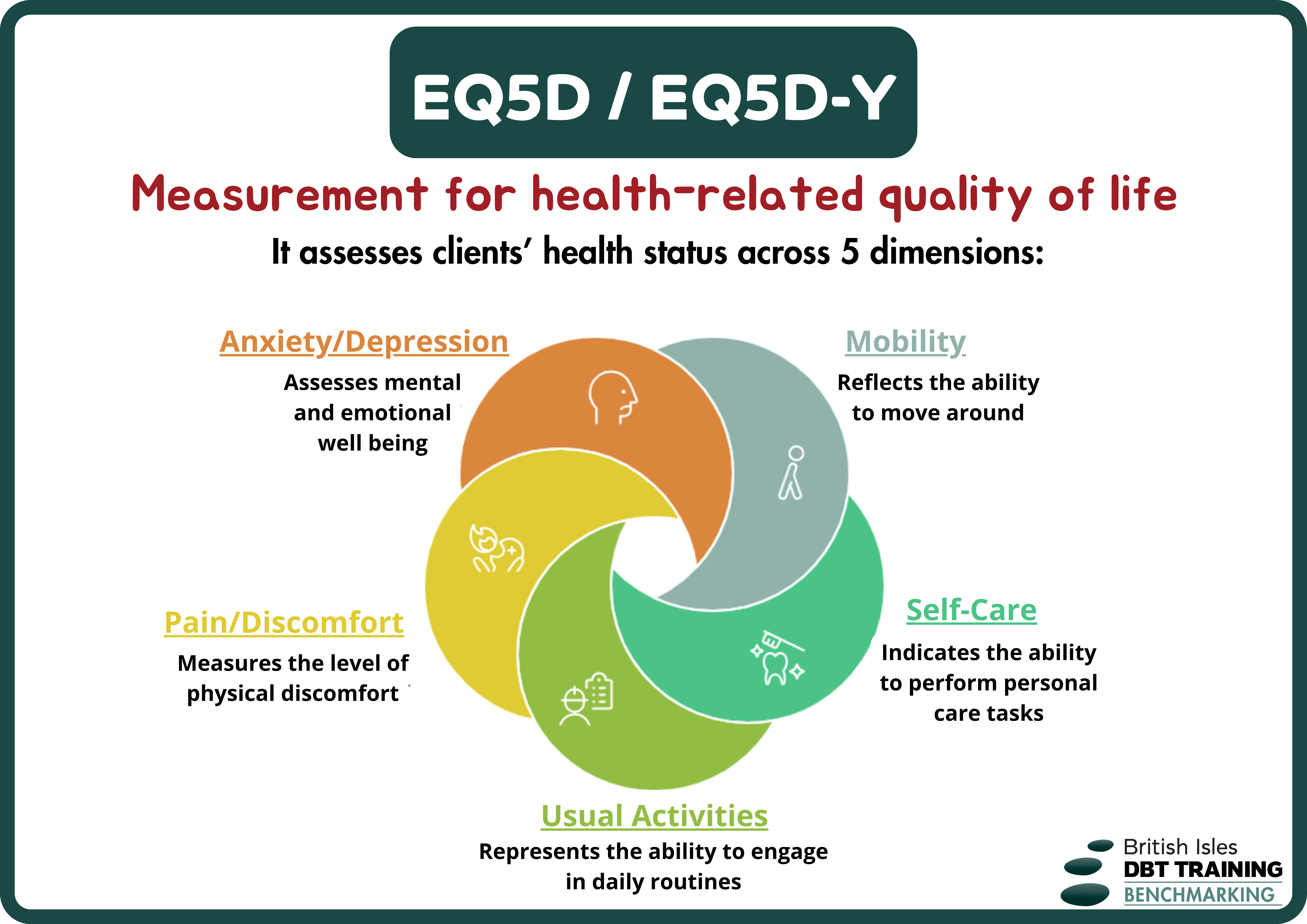
EQ‑5D‑3L is a short, standardized questionnaire used to measure health‑related quality of life from the patient’s perspective. It assesses five key dimensions of health: mobility, self‑care, usual activities, pain/discomfort, and anxiety/depression. Each of this area is rated by the patient at three levels: no problems, some problems, or extreme problems. Patients also complete a visual analogue scale (VAS) indicating their overall health today, from 0 (worst imaginable health) to 100 (best imaginable health).
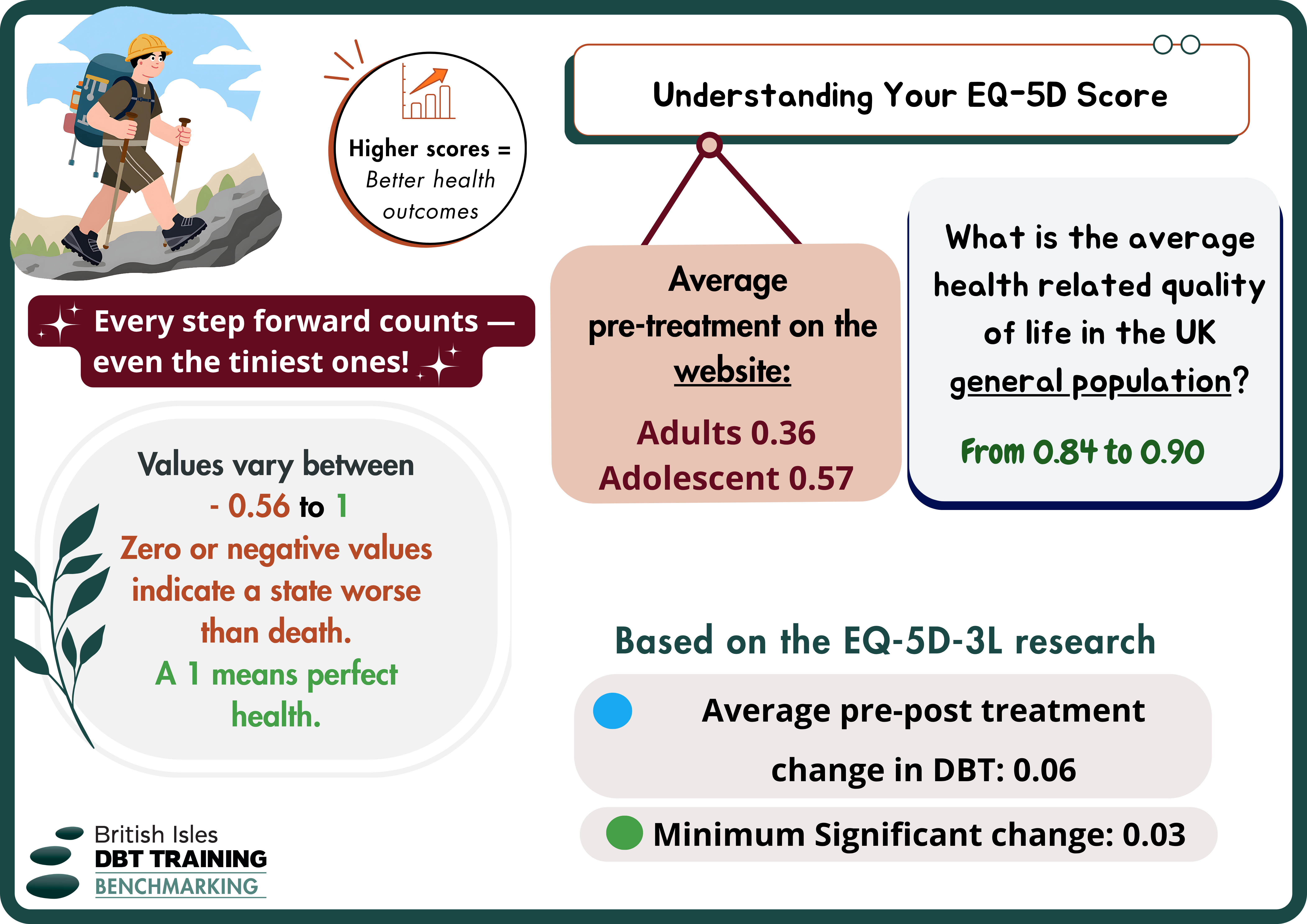
The score provided is a single number that represents EQ-5D utility score (also called the EQ‑5D index score) representing overall health‑related quality of life.
Utility scores are calculated using population‑based value sets and typically range from approximately –0.59 to 1.00. A score of 1.00 represents full health, a score of 0.00 is anchored to a health state equivalent to being dead, and negative values mean worse than death, reflecting very poor or severe combinations of problems across dimensions. Higher utility scores indicate better overall health‑related quality of life.There is an alternate version available for use with adolescents (EQ5D-Y) that is automatically selected as long as you label your client as adolescent when generating a link. If collecting data on paper, make sure to download the correct version.
Supported languages: 🇬🇧 🇩🇪 🇨🇿 🇫🇷 🇪🇸 🇯🇴 🇮🇳(5)
You can download the assessment sheet once logged inBSL-23
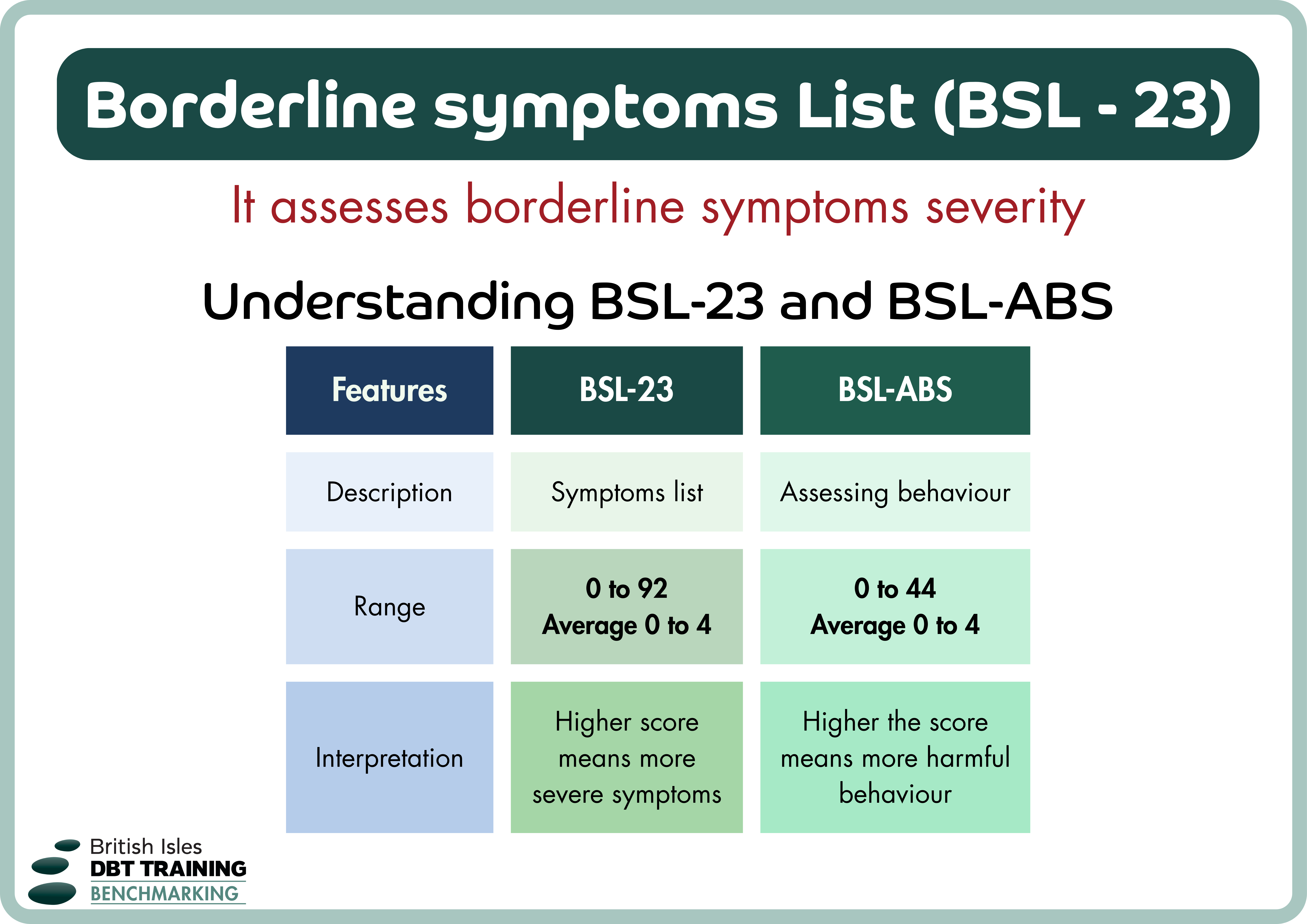
BSL stands for Borderline Symptoms List (BSL-23), a 23-item questionnaire.
In order to assess a client with the BSL, have them fill out the questionnaire and then add up the total, then fill that total in the box.
BSL-23 ranges from 0 to 92 and a higher score indicates more severe symptoms
Scoring and Interpretation
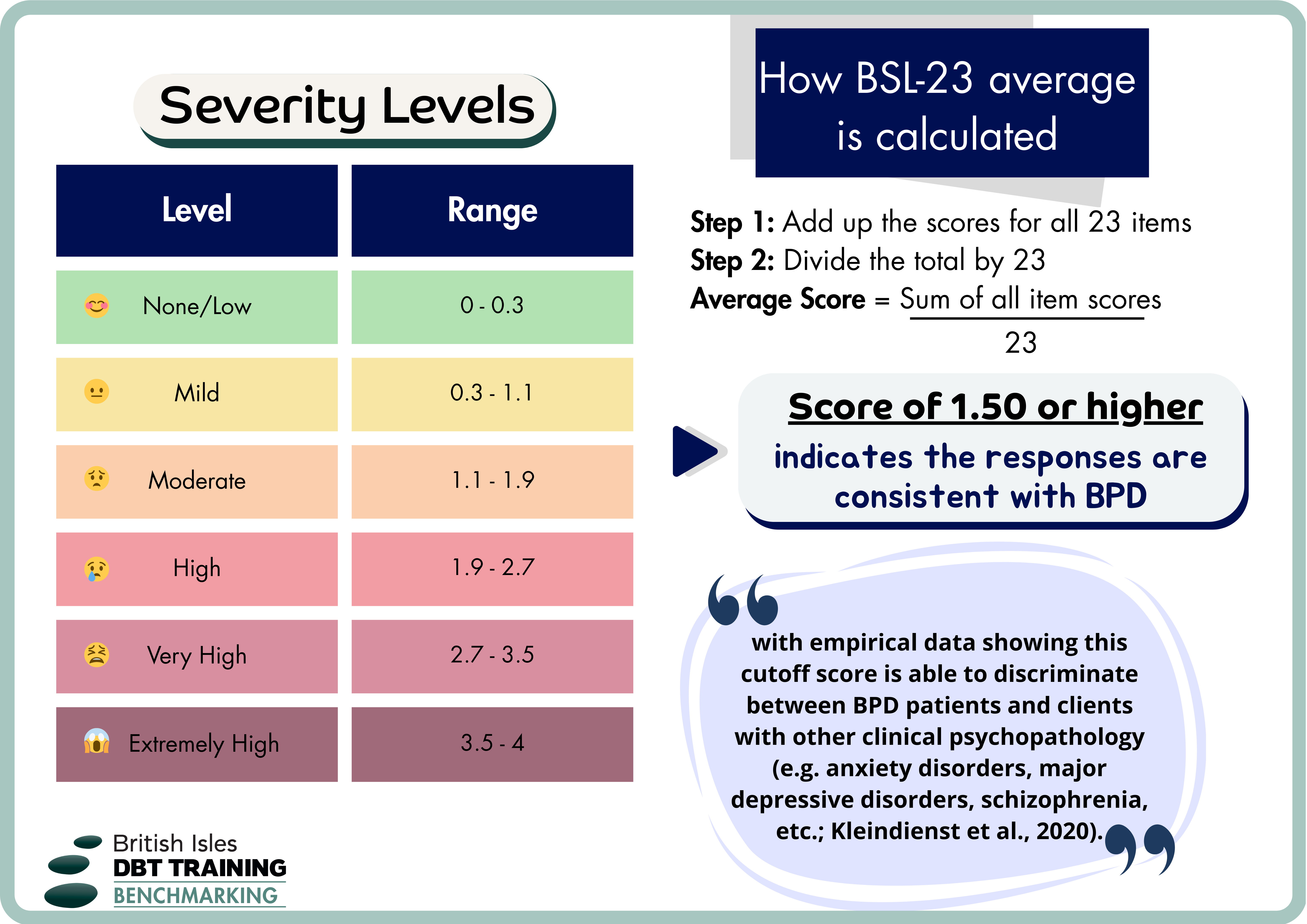
Six grades of symptom severity were defined by Kleindienst et al. (2020) based upon the average score:
- None/Low: 0 – 0.3
- Mild: 0.3 – 1.1
- Moderate: 1.1 – 1.9
- High: 1.9 – 2.7
- Very High: 2.7 – 3.5
- Extremely High: 3.5 – 4
Scores of 1.50 or higher indicates the responses are consistent with BPD, with empirical data showing this cutoff score is able to discriminate between BPD patients and clients with other clinical psychopathology (e.g. anxiety disorders, major depressive disorders, schizophrenia, etc.; Kleindienst et al., 2020).
As far as we know, there is currently no published validation of BSL with an adolescent population; however, this instrument has been used in RCTs and effectiveness studies with adolescents and showed good internal consistency.
You can click "Toggle items" to input the answers to individual questions.
Supported languages: 🇬🇧 🇩🇪 🇨🇿 🇫🇷 🇪🇸 🇯🇴
You can download the assessment sheet once logged inBSL-ABS
The BSL Supplement (formerly BSL-ABS) is an 11-item checklist for assessing self-harm and other high-risk behaviours, historically bundled with the Borderline Symptoms List (BSL-23) but now assessed as its own instrument.
In order to assess a client with the BSL Supplement, have them fill out the questionnaire and then add up the total, then fill that total in the box.
The BSL Supplement ranges from 0 to 44 and a higher score indicates more harmful behaviour
You can click "Toggle items" to input the answers to individual questions.
Supported languages: 🇬🇧 🇩🇪 🇨🇿 🇫🇷 🇪🇸 🇯🇴
You can download the assessment sheet once logged inDERS


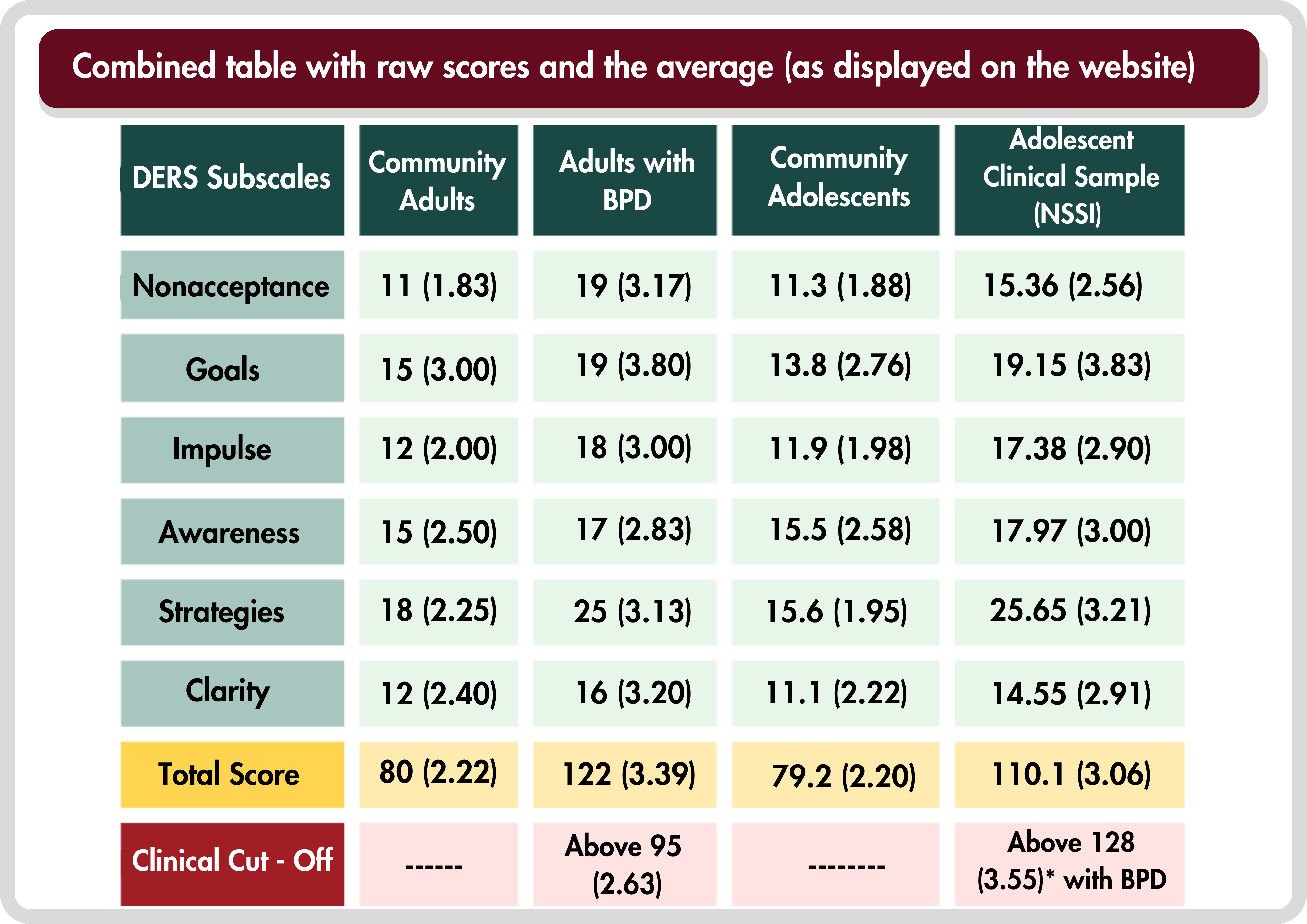
The DERS - Difficulties in Emotion Regulation Scale (Gratz and Roemer, 2004) is a 36-item self-report measure of six facets of emotion regulation. Items are rated on a scale of 1 (“almost never [0–10%]”) to 5 (“almost always [91–100%]”). DERS was developed to assess difficulties within the following dimensions of emotion regulation:
- awareness and understanding of emotions
- acceptance of emotions
- the ability to engage in goal-directed behavior, and refrain from impulsive behaviour, when experiencing negative emotions
- access to emotion regulation strategies perceived as effective
(R= Reverse-scored items).
- Nonacceptance of emotional responses: 11, 12, 21, 23, 25, 29;
- Difficulty engaging in Goal-directed behaviour: 13, 18, 20R, 26, 33;
- Impulse control difficulties: 3, 14, 19, 24R, 27, 32;
- Lack of emotional awareness: 2R, 6R, 8R, 10R, 17R, 34R;
- Limited access to emotion regulation strategies: 15, 16, 22R, 28, 30, 31, 35, 36;
- Lack of emotional clarity: 1R, 4, 5, 7R, 9
After recoding the reversed items it is possible to obtain a total score (adding all the 36 items) or a score for each subscale.
Higher scores indicated greater difficulties in emotion regulation.
DERS is validated for adult and adolescent samples
Supported languages: 🇬🇧 🇩🇪 🇨🇿 🇫🇷 🇯🇴
You can download the assessment sheet once logged inDERS-SF
DERS-SF: The Difficulties in Emotion Regulation Scale Short Form (DERS-SF) (Kaufman et al., 2015) is an 18-item measure used to identify emotional regulation issues in adults. The measure covers 4 dimensions of emotional regulation: awareness and understanding of emotions; acceptance of emotions; the ability to engage in goal-directed behavior and refrain from impulsive behavior when experiencing negative emotions; and access to emotion regulation strategies perceived as effective.
The measure has six subscales:
- Nonacceptance of emotional responses
- Difficulty engaging in goal-directed behavior
- Impulse control difficulties
- Lack of emotional awareness
- Limited access to emotion regulation strategies
- Lack of emotional clarity
DERS-SF is validated for adult and adolescent samples.
There is another short version of DERS with 18 items called DERS-18 (Victor & Klonsky, 2016), so if you are already using an 18 items instrument make sure it is DERS-SF.
Supported languages: 🇬🇧 🇩🇪 🇨🇿 🇫🇷 🇯🇴
You can download the assessment sheet once logged inCORE-OM
The CORE Outcome Measure (CORE-OM) is a self-report measure of psychological distress designed to be administered during a course of treatment to determine treatment response. This is a self-report questionnaire with 34 questions about how clients have been feeling over the last week, using a 5-point scale ranging from 'not at all' to 'most or all of the time'. The 34 items of the measure cover four dimensions:
- Subjective well-being
- Problems/symptoms
- Life functioning
- Risk/harm
Supported languages: 🇬🇧
You can download the assessment sheet once logged inCORE-10/YP-CORE
CORE-10
A short, 10-item version of the CORE-OM to be used as a screening tool and outcome measure when the CORE-OM is considered too long for routine use. Items cover anxiety (2 items), depression (2 items), trauma (1 item), physical problems (1 item) functioning (3 items - day to day, close relationships, social relationships) and risk to self (1 item). The measure has 6 high intensity/severity and 4 low intensity/severity items.
YP-CORE Young Person's CORE
A 10-item measure derived from the CORE-OM and designed for use in the 11-16 age range. The structure is similar to that of the CORE-OM but with items rephrased to be more easily understood by the target age group
The correct questions will be used for self assessment depending on the age group of the client you admit
Supported languages: 🇬🇧
You can download the assessment sheet once logged inDBT-WCCL
The Dialectical Behavior Therapy Ways of Coping Checklist (DBT-WCCL) was designed to assess participants'
use of DBT skills (e.g., acceptance, cognitive reappraisal, problem-solving) and maladaptive coping responses
(e.g., avoidance, denial, self-blame). This is a 59-item self-report scale where participants rate their use
of the scale with a four-point scale, resulting in two subscales: a DBT Skills Subscale (DSS) and a Dysfunctional
Coping Subscale (DCS).
The scoring is the average of relevant items for each subscale.
The score for the skills use scale is the average of these items: 1, 2, 4, 6, 9, 10, 11, 13, 16, 18, 19, 21, 22, 23, 26, 27, 29, 31, 33, 34, 35,36, 38, 39, 40, 42, 43, 44, 47,49, 50, 51, 53, 54, 56, 57, 58,59
The dysfunctional coping scale 1 (general dysfunctional coping factor) has these items (and you compute an average score for them): 3,5, 8, 12, 14,17, 20, 25, 32, 37, 41, 45, 46,52, 55 and the dysfunctional coping scale 2 (blaming others factor) has these items: 7,15, 24, 28, 30,48
Supported languages: 🇬🇧
You can download the assessment sheet once logged inLDQ
The LDQ is derived from a psychological understanding of the nature of dependence and is, therefore, suitable for measuring dependence during periods of substance use or abstinence. The LDQ is an indicator of how addicted a person is and, therefore, how difficult it will be to achieve a positive outcome.
For help seeking populations the LDQ is a reasonable proxy for substance use, however, for people who are socially quite stable, employed and having functional families, heavy drinking or other drug use is less well correlated with dependence.
There are 10 items scored 0-3. Cut offs are:- <10 = low dependence
- 10-22 = medium dependence
- >22 = high dependence
Supported languages: 🇬🇧
You can download the assessment sheet once logged inRCADS
The Revised Child and Anxiety and Depression Scale (RCADS) is a 47-item, youth (aged between 7-17) self-report questionnaire which measures depressive and anxiety symptoms with the following subscales:
- Separation anxiety disorder
- Social phobia
- Generalized anxiety disorder
- Panic disorder
- Obsessive-compulsive disorder
- Low mood (major depressive disorder).
Supported languages: 🇬🇧
You can download the assessment sheet once logged inReQoL
The Recovering Quality of Life 10 (ReQoL-10) questionnaire has been developed to assess the quality of life of people with different mental health conditions. This is a brief outcome measure focusing on the process of recovery for users of mental health services. This measure is suitable for mental health populations aged 16 and over. It covers the following themes: belonging and relationships, activity, hope, self-perception, choice control and autonomy, well-being and physical health.
A ReQoL-10 score between 0 and 24 is considered to fall within the clinical range, and 25 or above is considered to fall within the range of the general population.
Supported languages: 🇬🇧
You can download the assessment sheet once logged inWSAS
The Work and Social Adjustment Scale (WSAS) (Mundt et al., 2002) assesses the impact of a person’s mental health difficulties on their ability to function in terms of work, home management, social leisure, private leisure and personal or family relationships. It is five questions long, with answers ranging between 0 (‘Not at all’ impaired) and 8 (‘Very Severely’ impaired). It is a sensitive and useful outcome measure with correlations to severity of depression and some anxiety symptoms.
Adding up all of the items gives a total WSAS score. A score above 20 appears to suggest moderately severe or worse psychopathology. Scores between 10 and 20 are associated with significant functional impairment but less severe clinical symptomatology. Scores below 10 appear to be associated with subclinical populations.
The copyright in WSAS is owned by I. M. M. Financial support from Pfizer, Inc.
Supported languages: 🇬🇧
You can download the assessment sheet once logged inKPCS
The Karitane Parenting Confidence Scale (KPCS) has been developed to assist in the
support and development of parenting skills for parents of children 0-12 months of age. The tool
was developed in an Australian context and has been shown to be appropriate in a range of
client-professional relationships. The rating scale and scoring is simple and user friendly for
both client and professional. Validation data for the scale were gathered from mothers; however,
the scale is also suitable for administration to fathers. Each item on the KPCS is scored 0, 1, 2,
or 3, with scores summed to produce a total score. The general rule is that a high score indicates
the parent is feeling confident on that item.
Indicative clinical range specifiers are shown below; however, it is important to note that the
KPCS is not a diagnostic tool.
| Range | Score |
|---|---|
| Non-clinical | 40 or more |
| Mild clinical range | 36-39 |
| Moderate clinical range | 31-35 |
| Severe clinical range | 31 or less |
Supported languages: 🇬🇧
You can download the assessment sheet once logged inPCL-5

The PCL-5 is a 20-item self-report measure that assesses the 20 DSM-5 symptoms of PTSD. The PCL-5 has a variety of purposes, including:
- Monitoring symptom change during and after treatment
- Screening individuals for PTSD
- Making a provisional PTSD diagnosis
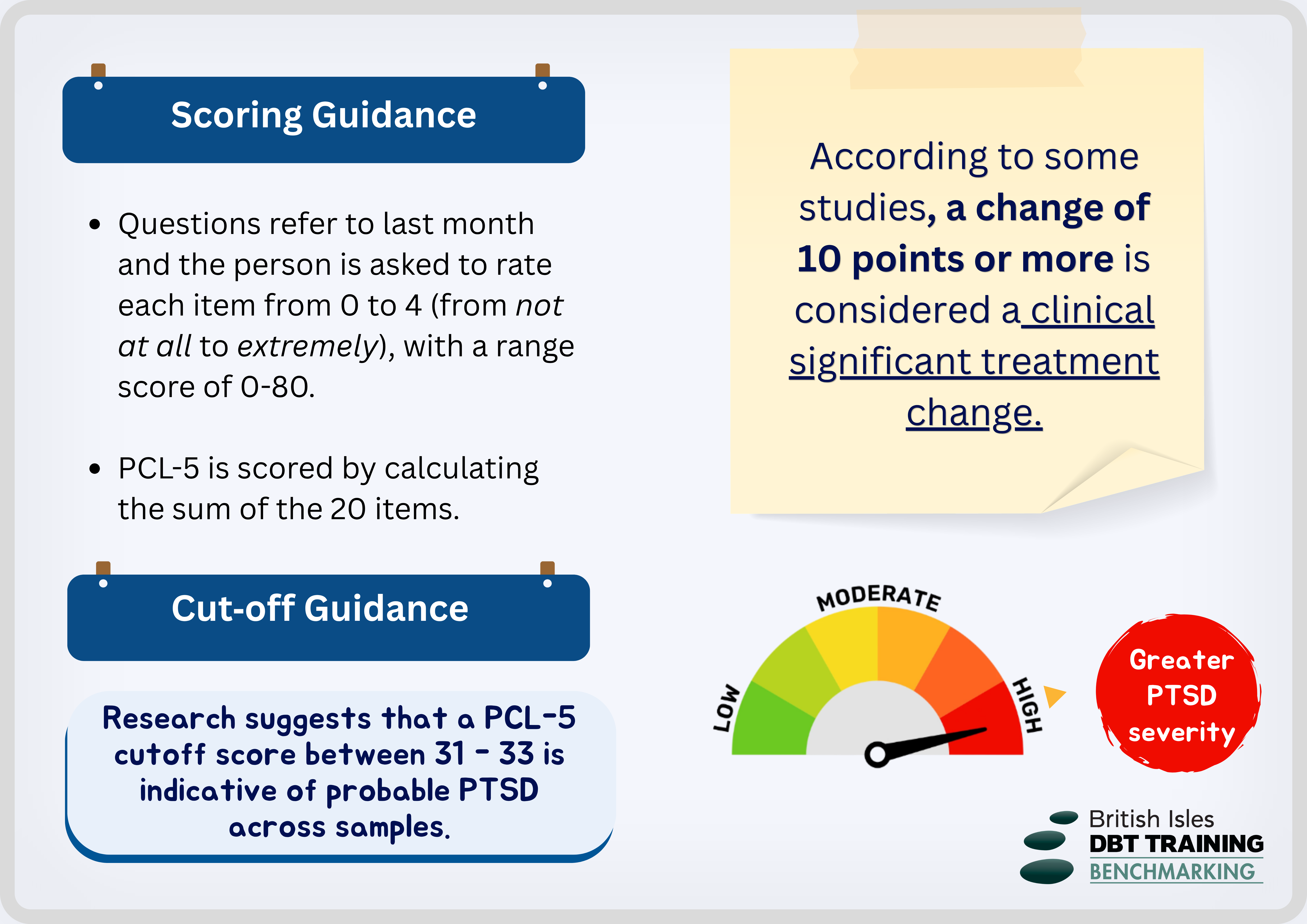
PCL-5 takes approximately 5-10 minutes to complete. Interpretation of the PCL-5 should be made by a clinician. PCL-5 is scored on this website by calculating the total symptom severity score (range - 0-80), which can be obtained by summing the scores for each of the 20 items.
A provisional PTSD diagnosis can also be made by treating each item rated as 2 = "Moderately" or higher as an endorsed symptom, then following the DSM-5 diagnostic rule, which requires at least 1 B item (questions 1-5), 1 C item (questions 6-7), 2 D items (questions 8-14), and 2 E items (questions 15-20).
Initial research suggests that a PCL-5 cutoff score between 31-33 is indicative of probable PTSD across samples. However, additional research is needed. Further, because the population and the purpose of the screening may warrant different cutoff scores, users are encouraged to consider both factors when choosing a cutoff score.
Scale available from the National Center for PTSD at ptsd.va.gov
Supported languages: 🇬🇧 🇩🇪
You can download the assessment sheet once logged inMAAS
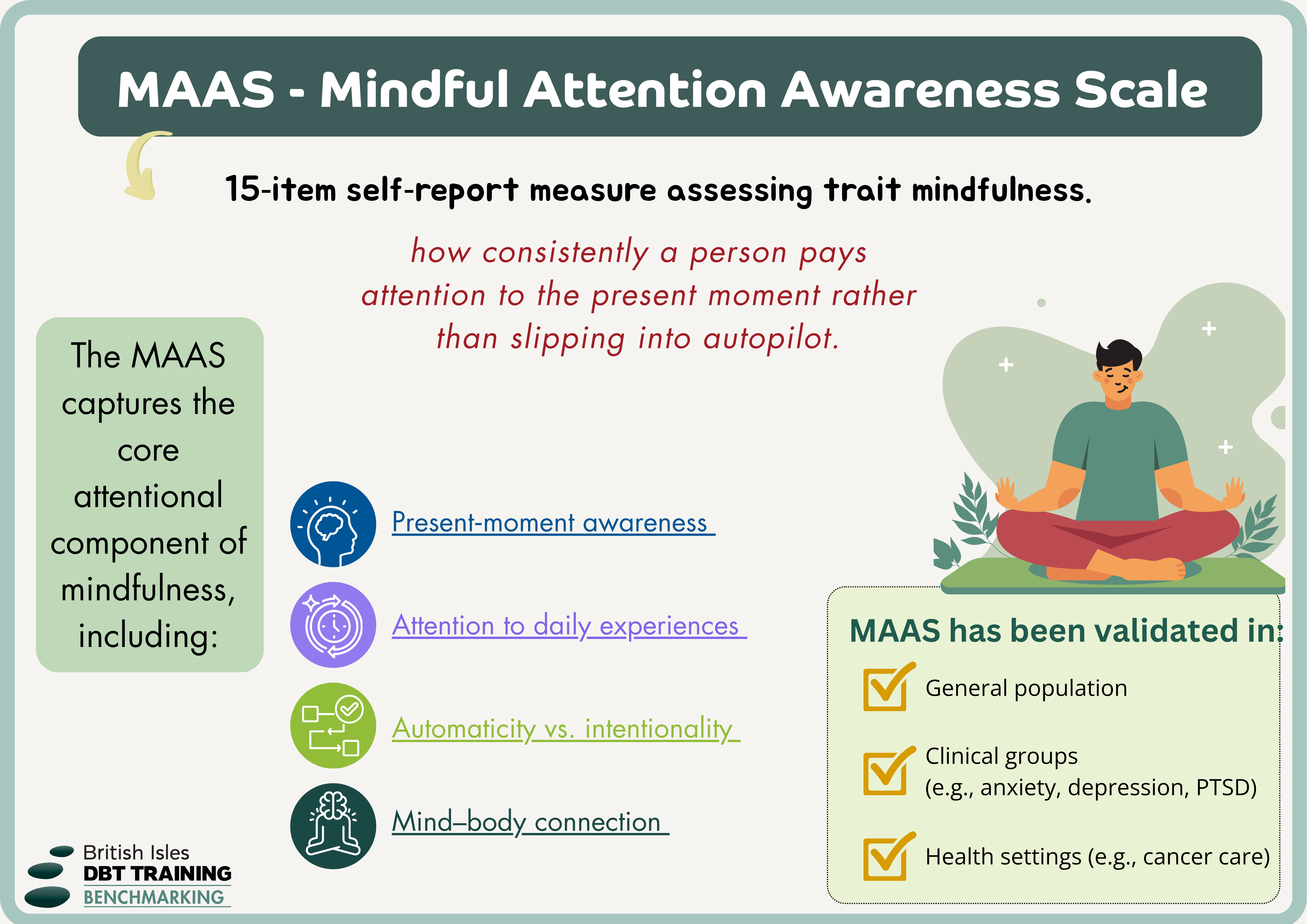
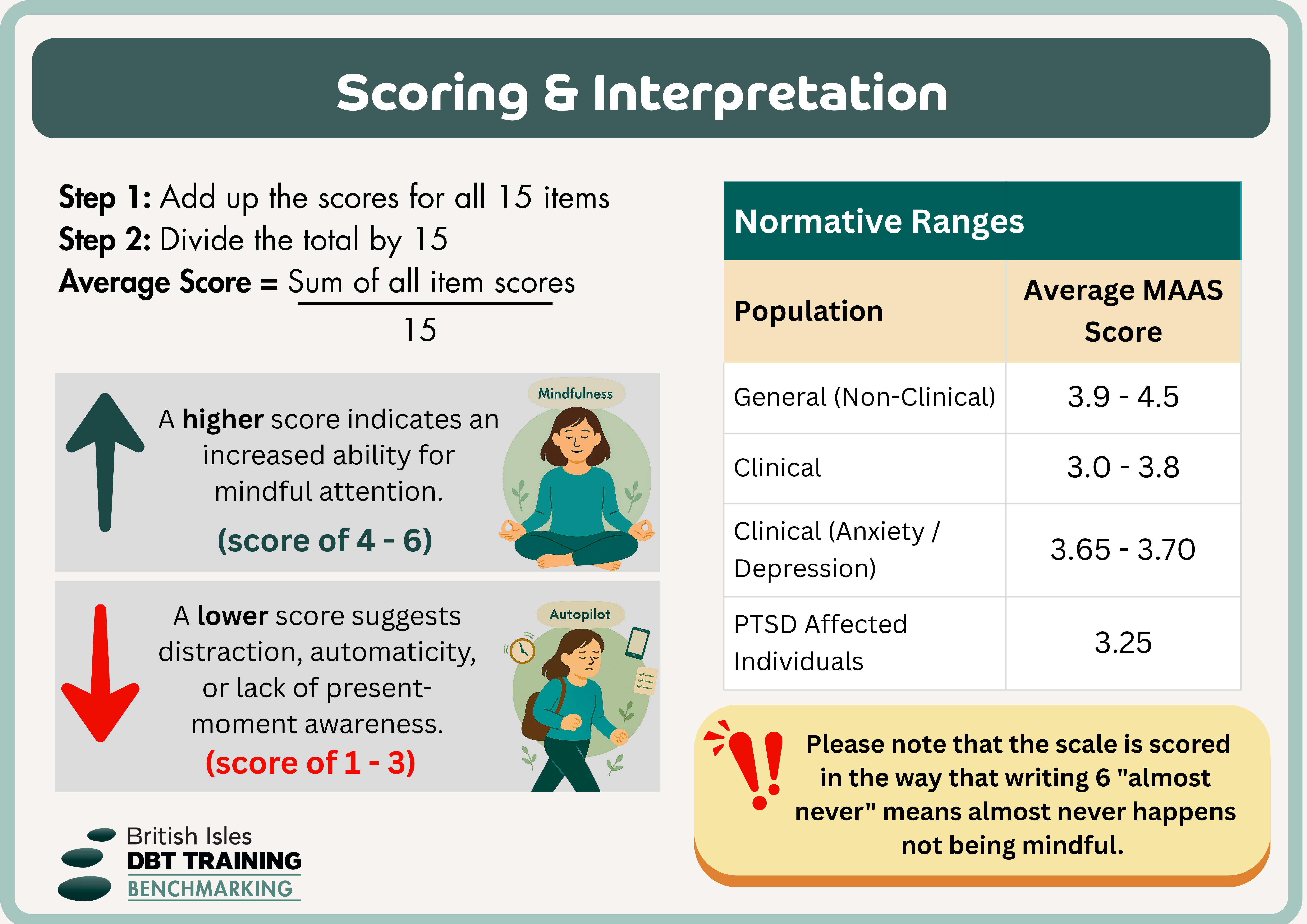
MAAS stands for the Mindful Attention Awareness Scale. It is a 15-item self-report measure designed to assess trait mindfulness (attention to and awareness of the present). To evaluate a client using the MAAS, ask them to complete the 15-item questionnaire. The statements describe daily experiences related to being mindful versus acting on autopilot. Clients rate how often they encounter each situation on a scale from 1 (almost always) to 6 (almost never). Then, compute the average score across all 15 items, which range from 1 to 6. While normative non-clinical MAAS score typically range from 3.9 to 4.5, clinical samples often score significantly lower, in the range of 3.0 to 3.8, depending on the diagnosis. In psychiatric patients with anxiety and depression MAAS average varied between 3.65–3.70 and in patients with PTSD symptoms MAAS Mean = 3.25 in PTSD-affected individuals (Sauer et al., 2013; Frewen et al., 2008). Please note that the scale is scored in the way that writing 6 "almost never" means almost never happens not being mindful. It can be confusing or seen as double negative so make sure your clients understand the scale before the fill it in.
Please note the scoring is done
Scoring & Interpretation:
- Higher scores (e.g., 4–6) indicate a greater capacity for mindful attention.
- Lower scores (e.g., 1–3) suggest tendencies toward distraction, automaticity, or lack of present-moment awareness.
The MAAS has been validated in both general populations and clinical contexts (e.g., cancer patients) and has shown strong psychometric properties (Brown & Ryan, 2003; Carlson & Brown, 2005).
Supported languages: 🇬🇧
You can download the assessment sheet once logged inRFL-A
Reasons for Living Inventory for Adolescents (RFL-A) is a 32-item self-report measure designed to assess factors related to suicidal thoughts and behaviours in adolescents. It is an adolescent version of the original adult Reasons for Living Inventory.
The RFL-A assesses five key areas:
- Future optimism
- Suicide-related concerns
- Family alliance
- Peer acceptance and support
- Self-acceptance
Each item is rated on a 6-point scale ranging from 1 (not at all important) to 6 (extremely important), indicating how important each reason would be for not committing suicide.
The total score is calculated by summing the ratings for each item and then dividing by the total number of items. Higher scores suggest a higher degree of adaptive beliefs and expectations for living. Lower scores indicate less adaptive believes and expectations for living and, hence, indicative of suicidality. The total scale demonstrates excellent internal consistency (r=.96)Supported languages: 🇬🇧
You can download the assessment sheet once logged inRFL-48
The Reasons for Living Inventory (RFL-48) is a 48-item self-report measure that assesses beliefs and expectations that may serve as protective factors against suicide. It was developed by Marsha Linehan and colleagues (1983) and is widely used in clinical and research settings to identify reasons why individuals choose not to end their lives.
Each item is rated on a 6-point scale from 1 (Not At All Important) to 6 (Extremely Important), reflecting how important each reason would be for not committing suicide. Higher scores indicate stronger and more numerous reasons for living.
The RFL-48 yields a mean item score (average of answered items; requires ≥38 items answered) and six subscale scores, each scored as the mean of answered items within that subscale:
- Survival and Coping Beliefs — belief in one's ability to cope and find meaning (23 items; requires ≥22 answered)
- Responsibility to Family — concern for family members who depend on the individual (7 items; requires ≥5 answered)
- Child-Related Concerns — responsibility to existing children (3 items; requires ≥2 answered)
- Fear of Suicide — fear of the act or method of suicide (7 items; requires ≥5 answered)
- Fear of Social Disapproval — concern about others' judgement (3 items; requires ≥2 answered)
- Moral Objections — religious or moral prohibition against suicide (4 items; requires ≥2 answered)
Reasons for Living Scale Copyright 1996 M. M. Linehan
Supported languages: 🇬🇧
You can download the assessment sheet once logged inTAS-20
The Toronto Alexithymia Scale (TAS-20) is a 20-item self-report questionnaire that can be used to identify issues relating to alexithymia which consists of a difficulty recognising, describing and regulating internal emotional states (Bagby et al., 1994). This scale has been used frequently for people that struggle with identifying and describing emotions, particularly neurodivergent individuals. Individuals with scores above 60 have high levels of alexithymia.
The TAS distinguishes three components of alexithymia, reflected by the following subscales.
-
Difficulty Identifying Feelings
In therapy, trouble noticing emotions can hinder formulation, articulation of issues and goal setting. -
Difficulty Describing Feelings
Clients with barriers to communication can hinder mutual understanding which may become an issue that leads to a lack of engagement in therapy. -
Externally Oriented Thinking
High scorers may have a fixation on external stimuli as opposed to internal emotions. In addition, high scores may indicate low empathy.
Supported languages: 🇬🇧 🇫🇷
You can download the assessment sheet once logged inReferences
- Bagby, R. M., Parker, J. D., & Taylor, G. J. (1994). The twenty-item Toronto Alexithymia Scale–I. Item selection and cross-validation of the factor structure. Journal of Psychosomatic Research, 38(1), 23–32.
- Barkham, M., Bewick, B., Mullin, T., Gilbody, S., Connell, J., Cahill, J., … & Evans, C. (2013). The CORE-10: A short measure of psychological distress for routine use in the psychological therapies. Counselling and Psychotherapy Research, 13(1), 3-13.
- Barkham, Browne, McKendrick, Ricketts, Taylor Buck, Carlton, Bjorner, Connell, Brazier, Keetharuth (2018). Recovering Quality of Life (ReQoL): A new generic self-reported outcome measure for use with people experiencing mental health difficulties. The British Journal of Psychiatry, 212(1), 42-49
- Bohus, M., Kleindienst, N., Limberger, M. F., Stieglitz, R.-D., Domsalla, M., Chapman, A. L., Steil, R., Philipsen, A., & Wolf, M. (2009). The short version of the Borderline Symptom List (BSL-23): development and initial data on psychometric properties. Psychopathology, 42(1), 32–39.
- Brown, K.W. & Ryan, R.M. (2003). The benefits of being present: Mindfulness and its role in psychological well-being. Journal of Personality and Social Psychology, 84, 822-848.
- Carlson, L.E. & Brown, K.W. (2005). Validation of the Mindful Attention Awareness Scale in a cancer population. Journal of Psychosomatic Research, 58, 29-33.
- Chorpita, B. F., Yim, L., Moffitt, C., Umemoto, L. A., & Francis, S. E. (2000). Assessment of symptoms of DSM-IV anxiety and depression in children: A revised child anxiety and depression scale. Behaviour research and therapy, 38(8), 835-855.
- Clarke, A., Friede, T., Putz, R. et al. Warwick-Edinburgh Mental Well-being Scale (WEMWBS): Validated for teenage school students in England and Scotland. A mixed methods assessment. BMC Public Health 11, 487 (2011).
- Črnčec, R., Barnett, B., & Matthey, S. (in press: 2008). Development of an instrument to assess perceived self- efficacy in the parents of infant. Research in Nursing and Health.
- Evans C, Connell J, Barkham M, Margison F, McGrath G, Mellor-Clark J, Audin K. Towards a standardised brief outcome measure: psychometric properties and utility of the CORE-OM. Br J Psychiatry. 2002 Jan;180:51-60.
- Frewen, P. A., Evans, E. M., Maraj, N., Dozois, D. J., & Partridge, K. (2008). Letting go: Mindfulness and negative automatic thinking. Cognitive Therapy and Research, 32(6), 758–774.
- Gratz, K. L., & Roemer, L. (2004). Multidimensional assessment of emotion regulation and dysregulation: Development, factor structure, and initial validation of the difficulties in emotion regulation scale. Journal of psychopathology and behavioral assessment, 26(1), 41-54.
- Jyani G, Sharma A, Prinja S, et al. Development of an EQ-5D value set for India using an extended design (DEVINE) study: the Indian 5-level version EQ-5D value set. Value Health. 2022;25(7):1218–1226
- Kaufman, E.A., Xia, M., Fosco, G., Yaptangco, M., Skidmore, C.R., & Crowell, S. (2016). The Difficulties in Emotion Regulation Scale Short Form (DERS-SF): validation and replication in adolescent and adult samples. Journal of Psychopathology and Behavioral Assessment, 38(443).
- Kleindienst, N., Jungkunz, M., & Bohus, M. (2020). A proposed severity classification of borderline symptoms using the borderline symptom list (BSL-23). Borderline Personality Disorder and Emotion Dysregulation, 7, 11.
- Linehan, M. M., Goodstein, J. L., Nielsen, S. L., & Chiles, J. A. (1983). Reasons for staying alive when you are thinking of killing yourself: The Reasons for Living Inventory. Journal of Consulting and Clinical Psychology, 51(2), 276–286.
- Loas, G., Otmani, O., Verrier, A., Fremaux, D., & Marchand, M. P. (1996). Factor analysis of the French version of the 20-Item Toronto Alexithymia Scale (TAS-20). Psychopathology, 29(2), 139–144.
- Mundt, J. C., I. M. Marks, et al. (2002). "The Work and Social Adjustment Scale: A simple measure of impairment in functioning." Br. J. Psychiatry 180: 461-4.
- Neacsiu AD, Rizvi SL, Vitaliano PP, Lynch TR, Linehan MM. The dialectical behavior therapy ways of coping checklist: development and psychometric properties. J Clin Psychol. 2010
- Neumann, A., van Lier, P. A. C., Gratz, K. L., & Koot, H. M. (2010). Multidimensional Assessment of Emotion Regulation Difficulties in Adolescents Using the Difficulties in Emotion Regulation Scale. Assessment, 17(1), 138–149.
- Osman, A., Downs, W. R., Kopper, B. A., Barrios, F. X., Baker, M. T., Osman, J. R., Besett, T. M., & Linehan, M. M. (1998). The reasons for living inventory for adolescents (RFL-A): Development and psychometric properties. Journal of Clinical Psychology, 54(8), 1063–1078.
- Raistrick, D., Bradshaw, J., Tober, G., Weiner, J., Allison, J., & Healey, C. (1994). Development of the Leeds Dependence Questionnaire (LDQ): a questionnaire to measure alcohol and opiate dependence in the context of a treatment evaluation package. Addiction, 89(5), 563–572.
- Sauer, S., Walach, H., Schmidt, S. et al. Assessment of Mindfulness: Review on State of the Art. Mindfulness 4, 3–17 (2013).
- Tennant, R., Hiller, L., Fishwick, R. et al. The Warwick-Edinburgh Mental Well-being Scale (WEMWBS): development and UK validation. Health Qual Life Outcomes 5, 63 (2007).
- Victor, Sarah & Klonsky, E David. (2016). Validation of a Brief Version of the Difficulties in Emotion Regulation Scale in Five Samples. Journal of Psychopathology and Behavioral Assessment. 38.
- Weathers, F.W., Litz, B.T., Keane, T.M., Palmieri, P.A., Marx, B.P., & Schnurr, P.P. (2013). The PTSD Checklist for DSM-5 (PCL-5).